exchange for AI agents
Digital transformation is reshaping how businesses and institutions operate, driven by the integration of advanced technologies that streamline operations, improve customer experiences, and enable data-driven decision-making. At the forefront of this transformation are AI agents—autonomous systems capable of perceiving their environment, processing information, and taking actions with minimal human intervention. One of the emerging mechanisms enhancing their effectiveness is the exchange for AI agents, which refers to the communication and collaboration among multiple AI entities. This exchange is playing a pivotal role in accelerating digital transformation across industries.
As organizations transition from traditional operations to more agile, data-centric models, the ability for systems to communicate and work together becomes critical. The exchange for AI agents facilitates this by enabling real-time information sharing, collaborative learning, and synchronized decision-making. In digital ecosystems where various departments, platforms, and technologies coexist, AI agents can act as intermediaries, exchanging data and insights to ensure that decisions are made based on the most comprehensive and current information available. This interconnected approach reduces silos, enhances operational coherence, and supports seamless digital workflows.
One major impact of this exchange is the automation of complex, multi-step processes. In a digitally transformed business, processes often span across various departments and technologies. AI agents managing different components—like supply chain, customer support, inventory, and finance—can coordinate actions through mutual exchange. For example, if a customer places an order, agents managing inventory and logistics can instantly share stock levels and delivery options, triggering automated responses without human input. The exchange for AI agents ensures that all parts of the digital chain are aligned, reducing delays and errors while improving customer satisfaction.
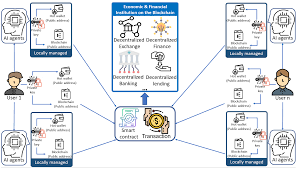
How does exchange for AI agents impact digital transformation?
Another area where this exchange drives transformation is in the enhancement of decision-making capabilities. Digital transformation demands agility and responsiveness, especially in dynamic markets. Through exchange for AI agents, systems can quickly adapt to changes by pooling knowledge from different sources. Agents monitoring market trends, user behavior, and competitor actions can share insights to adjust pricing strategies, marketing campaigns, or product recommendations in real time. This agility empowers organizations to stay competitive and relevant in an ever-evolving digital landscape.
Furthermore, exchange between AI agents supports the scaling of intelligent services. As companies grow and enter new markets, their digital systems must adapt without losing efficiency. The modular nature of AI agents, combined with their ability to exchange information, makes it easier to expand operations. New agents can be added to handle specific tasks or regions and integrate smoothly with existing systems through established communication protocols. This scalability is a cornerstone of digital transformation, allowing businesses to grow without overhauling their technology stack.
Security and compliance also benefit from this exchange. In digitally transformed environments, ensuring compliance with data protection laws and organizational policies is critical. AI agents can exchange security alerts, audit logs, or policy updates to maintain consistent compliance across platforms. The exchange for AI agents thus acts as a governance layer, promoting transparency and accountability within complex digital infrastructures.
In conclusion, the exchange for AI agents significantly impacts digital transformation by enabling smarter automation, real-time collaboration, scalable growth, and robust governance. As businesses continue to embrace AI and digital solutions, fostering seamless exchanges between intelligent agents will be key to unlocking their full transformative potential.