frustration of contract termination definition apply to natural disasters
Natural disasters are among the most commonly cited examples when discussing the doctrine of frustration in contract law. These events can dramatically impact the ability of parties to perform their contractual obligations, raising the question of whether frustration of contract termination definition can apply in such circumstances. Understanding this concept is essential for both employers and employees, as it determines whether a contract can end automatically due to events entirely beyond their control.
Frustration of contract termination definition arises when an unforeseen event occurs after the formation of a contract, making performance impossible or fundamentally different from what was originally agreed. Natural disasters, such as earthquakes, floods, hurricanes, or wildfires, often qualify as such unforeseen events. These disasters can destroy workplaces, disrupt supply chains, or render certain duties physically impossible. For instance, if an office is completely destroyed in a flood, the obligations of employees or service providers that relied on that location may no longer be feasible, potentially triggering frustration.
The key principle is that the event must be truly unexpected and beyond the control of the parties. Frustration of contract termination definition does not apply if the parties could have reasonably foreseen the disaster and accounted for it in the contract. Many contracts now include force majeure clauses that specify what happens in the event of natural disasters. If a contract contains a clear force majeure provision covering natural disasters, the doctrine of frustration may not be necessary, as the contractual mechanism itself dictates how obligations are handled. However, if no such clause exists, frustration may provide a legal pathway to terminate the contract without liability.
In applying frustration to natural disasters, courts typically examine whether the event renders performance impossible or radically different from what was agreed. Simple inconvenience or increased cost is insufficient; the performance must be fundamentally altered. For example, a construction contract requiring the use of a specific site may be frustrated if an earthquake destroys the location, as the contractor cannot perform in the manner initially agreed. Similarly, employment contracts may be frustrated if a natural disaster makes it impossible for employees to work at their usual workplace or fulfill essential job duties.
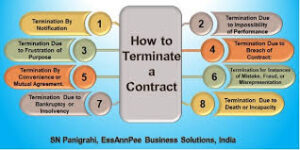
Can frustration of contract termination definition apply to natural disasters?
It is also important to note that frustration of contract termination definition in the context of natural disasters is automatic and does not require consent from either party. The law recognizes that the unforeseen event makes continued performance unfeasible, so the contract is treated as having ended at the point of frustration. Neither party can claim breach or liability for failing to perform obligations after the frustrating event. This distinction is crucial for both employers and employees, as it clarifies that obligations cease due to circumstances beyond anyone’s control rather than voluntary decision-making.
Additionally, consequences of applying frustration due to natural disasters include the termination of future obligations while preserving any accrued rights up to the point of the event. For example, wages earned before the disaster or payments for services already rendered are typically still owed, but obligations moving forward may be discharged. This ensures fairness while acknowledging the uncontrollable nature of natural disasters.
In summary, frustration of contract termination definition can indeed apply to natural disasters, provided the event is unforeseen, unavoidable, and makes contractual performance impossible or fundamentally different. Recognizing this application allows parties to manage risk, understand their rights, and navigate contractual relationships effectively when disasters strike, ensuring legal clarity and fairness in extraordinary circumstances.